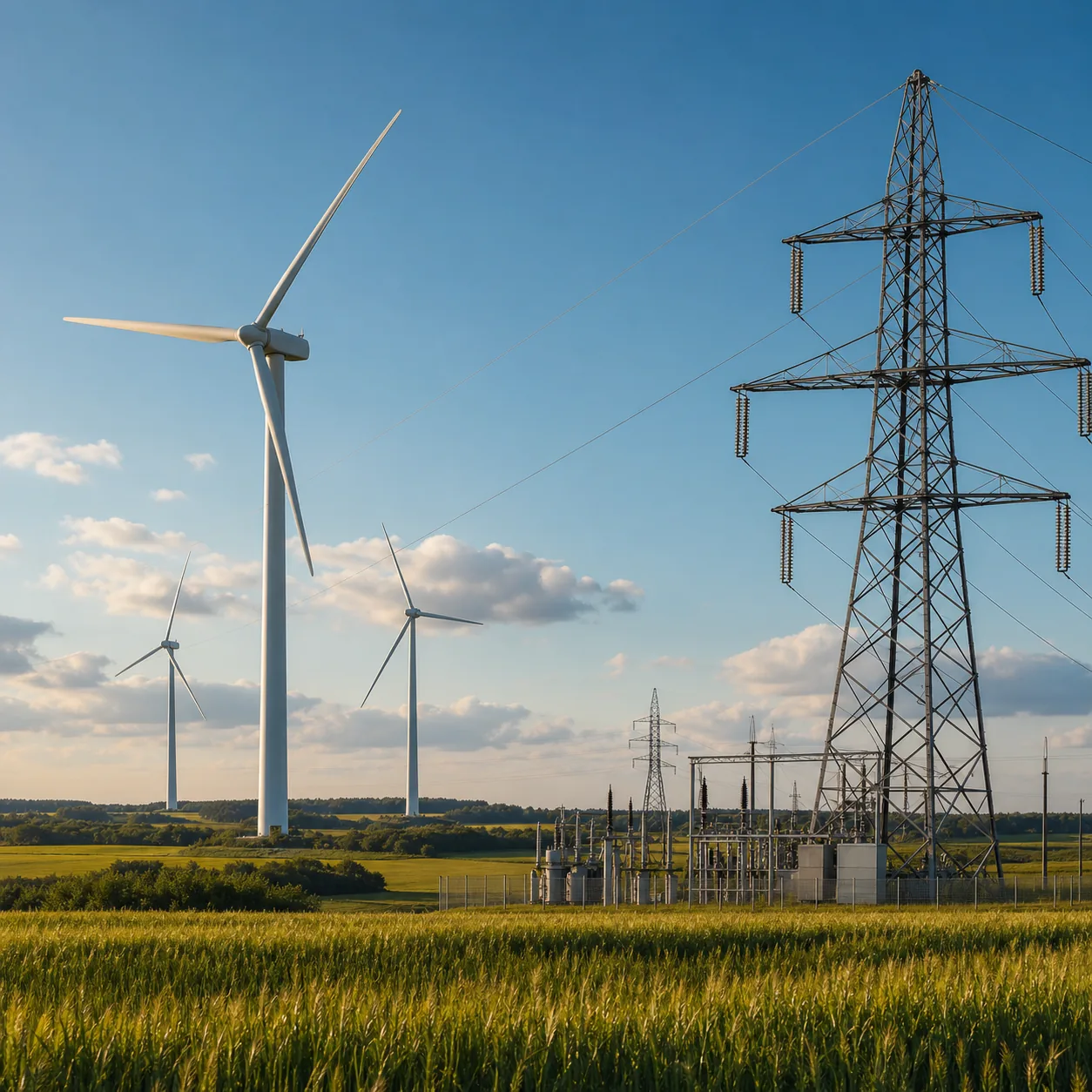
Wind Power Growth Is Becoming a Grid and Permitting Story
Wind Power Growth Is Becoming a Grid and Permitting Story deserves more than a short definition because it sits inside a changing wind landscape. The practical argument is that wind growth is increasingly shaped by permitting and grid access instead of turbine ambition. That framing keeps the article grounded: readers are not asked to accept a slogan, and the topic is not reduced to a single technology trend. The useful question is what problem the idea solves, what new constraints it creates, and how decision-makers can tell whether progress is real.
The starting point is the basic mechanism. Wind power is still a core pillar of renewable electricity, but the story is less simple than adding turbines. IRENA capacity data and EIA power forecasts both show wind continuing to contribute to clean electricity supply. Yet project delivery increasingly depends on transmission, permitting and supply-chain readiness. Onshore wind can be cost-effective where land, wind resources and grid access align. Offshore wind can deliver large volumes near coastal demand centers, but it is exposed to port constraints, vessel availability, cable supply, seabed leasing and higher financing costs. The IEA Energy Technology Perspectives 2026 report highlights clean technology supply chains and industrial competitiveness as major policy issues. Wind is directly affected because turbines, towers, blades, power electronics and vessels all rely on coordinated manufacturing and logistics. The market implication is that wind analysis should focus on execution risk. Strong wind resources are necessary, but not sufficient. The winning projects will be those with credible grid connection, realistic construction schedules and cost assumptions that survive procurement pressure. This remains true, but it is only the first layer. In real energy systems, technical performance, project timing, local infrastructure and market rules interact. A technology that looks strong in isolation can lose value if it cannot connect to the grid, if its output arrives at the wrong hours, or if the surrounding policy does not reward the service it provides.
The first issue to examine is that good wind resources are often far from demand centers or inside contested local planning processes. This is where many public discussions become too simple. Capacity announcements, investment headlines and policy targets are useful signals, yet they do not always show whether power is delivered reliably or whether costs are allocated fairly. A stronger analysis asks how the asset behaves during stressed hours, whether it reduces emissions in practice, and whether the project can keep operating without depending on unrealistic assumptions.
The second issue is system fit: the sector must solve community benefit, wildlife, radar, transmission and auction-design issues. Clean energy development is increasingly constrained by connections, permitting, supply chains, customer demand and local acceptance. These constraints are not secondary details. They often decide whether a project moves from presentation deck to operating asset. For that reason, a serious article should look at execution conditions rather than stopping at the promise of the technology or policy.
Commercially, wind remains valuable because its output profile can complement solar. Investors, utilities, industrial buyers and policymakers all see the same energy topic from different positions. A developer may care about revenue certainty, while a grid operator cares about reliability. A corporate buyer may care about emissions claims, while a community may care about land, water, jobs and bills. Good energy analysis has to hold these views together instead of treating one stakeholder perspective as the whole story.
There are also risks in overcorrecting. A technology can be oversold, but that does not make it irrelevant. A policy can be imperfect, but that does not mean the market should wait for perfect rules. The better approach is to identify the narrow conditions under which the idea works best. That means asking where costs are falling, where infrastructure is ready, where customers are real, and where the environmental benefit can be measured with confidence.
A practical reading checklist helps keep wind power growth is becoming a grid and permitting story from becoming a vague theme. First, identify the physical asset or behavior being discussed. Second, ask what metric proves progress: delivered electricity, lower fuel use, reduced emissions, lower system cost, faster connection or stronger reliability. Third, ask who pays and who benefits. Those three questions usually reveal whether the idea is moving from commentary into real deployment.
For readers, the most practical test is this: the next growth phase depends on execution discipline rather than broader enthusiasm. If the answer is unclear, the topic needs more evidence before it becomes a strong investment or policy claim. If the answer is clear, the next step is to examine scale, timing and trade-offs. This keeps the discussion professional and avoids both booster language and automatic skepticism. Energy transition progress is rarely a single breakthrough; it is usually a sequence of decisions that make useful deployment easier.
The conclusion is that wind power growth is becoming a grid and permitting story should be treated as a working question, not a finished answer. The field is moving quickly, but durable progress depends on execution discipline: credible data, realistic contracts, usable infrastructure, local trust and honest accounting of costs. That is the standard Ark Energy applies when covering clean energy topics. The point is not to make every technology sound equally important. The point is to explain where each one fits, where it fails, and what readers should watch next.